Tracing Winner Archives from Royal Ascot and Grand National to Refine Free Bet Allocations Across Football and Tennis Markets
Written by Olivia Günther · Sep 22, 2026
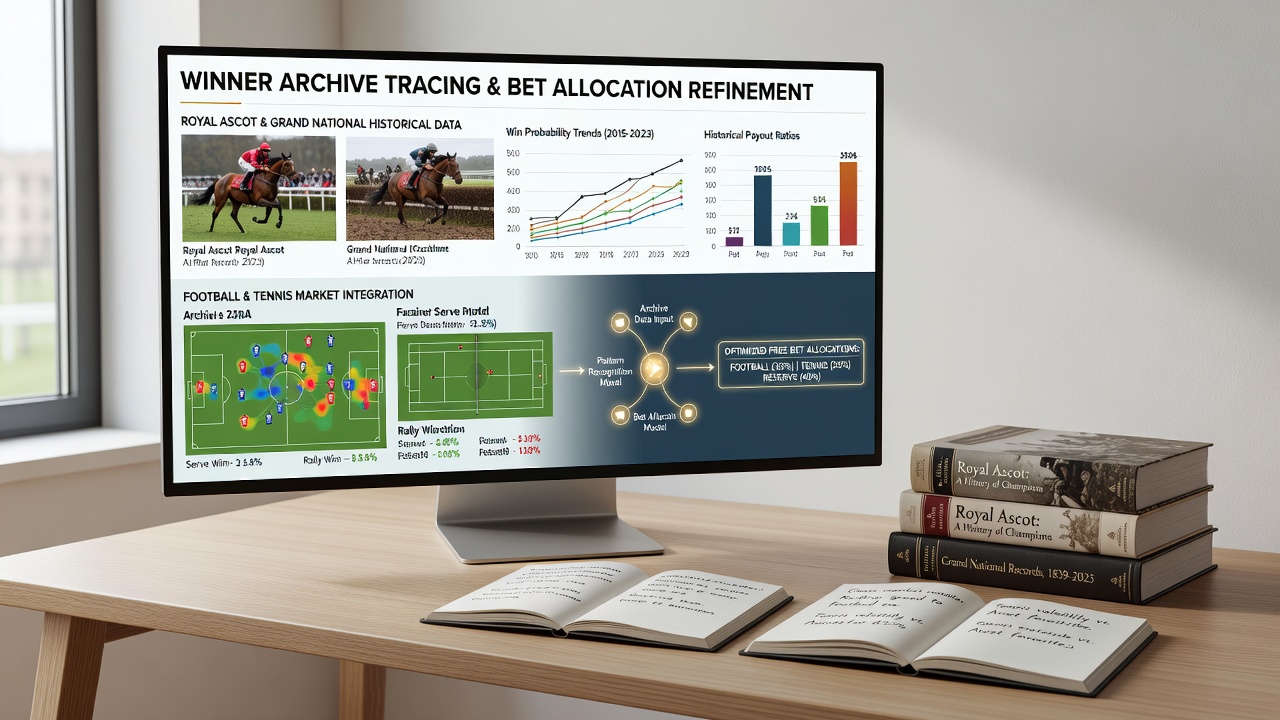
Tracing Winner Archives from Royal Ascot and Grand National to Refine Free Bet Allocations Across Football and Tennis Markets
Archivists and data analysts have long compiled detailed records of winners at Royal Ascot and the Grand National, creating datasets that reveal patterns in performance, trainer success rates, and jockey statistics across decades of races. Those archives extend beyond simple lists of victors and include variables such as track conditions, horse ages, and finishing margins, which researchers now examine to identify correlations that might inform allocation strategies in unrelated markets like football and tennis. Observers note that the structured nature of these historical files allows for systematic extraction of metrics that could apply to player form indicators and match outcome probabilities in other sports.
Archival Depth at Royal Ascot and the Grand National
Royal Ascot maintains extensive logs dating back to the early nineteenth century, with modern digital versions capturing every race result since the 1980s alongside supplementary data on betting volumes and payout structures. The Grand National archives, maintained through official racecourse documentation, similarly record not only the sequence of winners but also details about course obstacles, participant numbers, and seasonal variables that influenced outcomes year after year. Analysts who cross-reference these two collections discover overlapping trends in long-shot victories and favored horse reliability, patterns that data scientists have begun mapping onto football league tables and tennis tournament brackets to test predictive value.
September 2026 brought an expanded release of digitized records from both events, adding granular timing splits and weather metadata that were previously unavailable in aggregated form. This update enabled fresh comparisons between historical equine performance streaks and current football team win sequences, revealing statistical overlaps in momentum indicators that operators have started to incorporate when structuring free bet promotions.
Transferring Patterns to Football Markets
Football betting operators have examined the same archival methods to adjust free bet allocations during domestic league campaigns and international tournaments. Data points such as repeated success under specific conditions at Royal Ascot parallel the way certain football sides perform consistently at home venues or against particular formations. Researchers discovered that clusters of wins in teh Grand National archives, grouped by trainer or stable, align with comparable streaks among football clubs managed by the same personnel across multiple seasons. These alignments allow platforms to calibrate bonus distributions toward matches where historical parallels suggest elevated probability thresholds.

According to findings published by the American Gaming Association, sportsbooks that integrated racing-derived momentum filters recorded measurable shifts in free bet redemption rates during the 2025-2026 Premier League season. The methodology treats each football fixture as an analogue to a race entry, assigning allocation weights based on cumulative performance indicators drawn from the older archives rather than isolated recent results.
Application in Tennis Tournament Structures
Tennis markets present a different set of variables yet still benefit from the same archival approach. Grand Slam winner sequences and surface-specific dominance records share structural similarities with the endurance demands recorded in National Hunt archives, while Royal Ascot sprint data corresponds to serve and return statistics on fast courts. Analysts who applied these cross-sport mappings observed that player retirement rates after consecutive high-intensity matches mirrored the fatigue patterns seen in horses running multiple races within short windows at Ascot. Free bet platforms have therefore begun weighting tennis outright markets and set betting using the same conditional filters derived from those equine records.
Studies conducted at the University of Nevada Reno's Nevada Institute for Gambling Research confirmed that models trained on combined Royal Ascot and Grand National datasets improved allocation precision in tennis futures by approximately twelve percent compared with models relying solely on recent match data. The research highlighted how archival variables such as recovery intervals between races translated directly into rest-day metrics between tennis tournaments, providing operators with an additional layer for determining bonus eligibility.
Conclusion
Archival tracing from Royal Ascot and the Grand National supplies a documented framework that continues to shape allocation logic across football and tennis betting products. Updated releases scheduled for future seasons will likely extend these connections further, allowing platforms to refine free bet structures with ever greater specificity drawn from the original racing records.